IMJIN · HANTAN RIVER BASIN
A GRAIN SHAPED BY WATER, LAND AND PEOPLE.A record of one grain shaped by water, land, varieties and people
01 · LAND & WATER
An agricultural environment formed around the Imjin and Hantan rivers
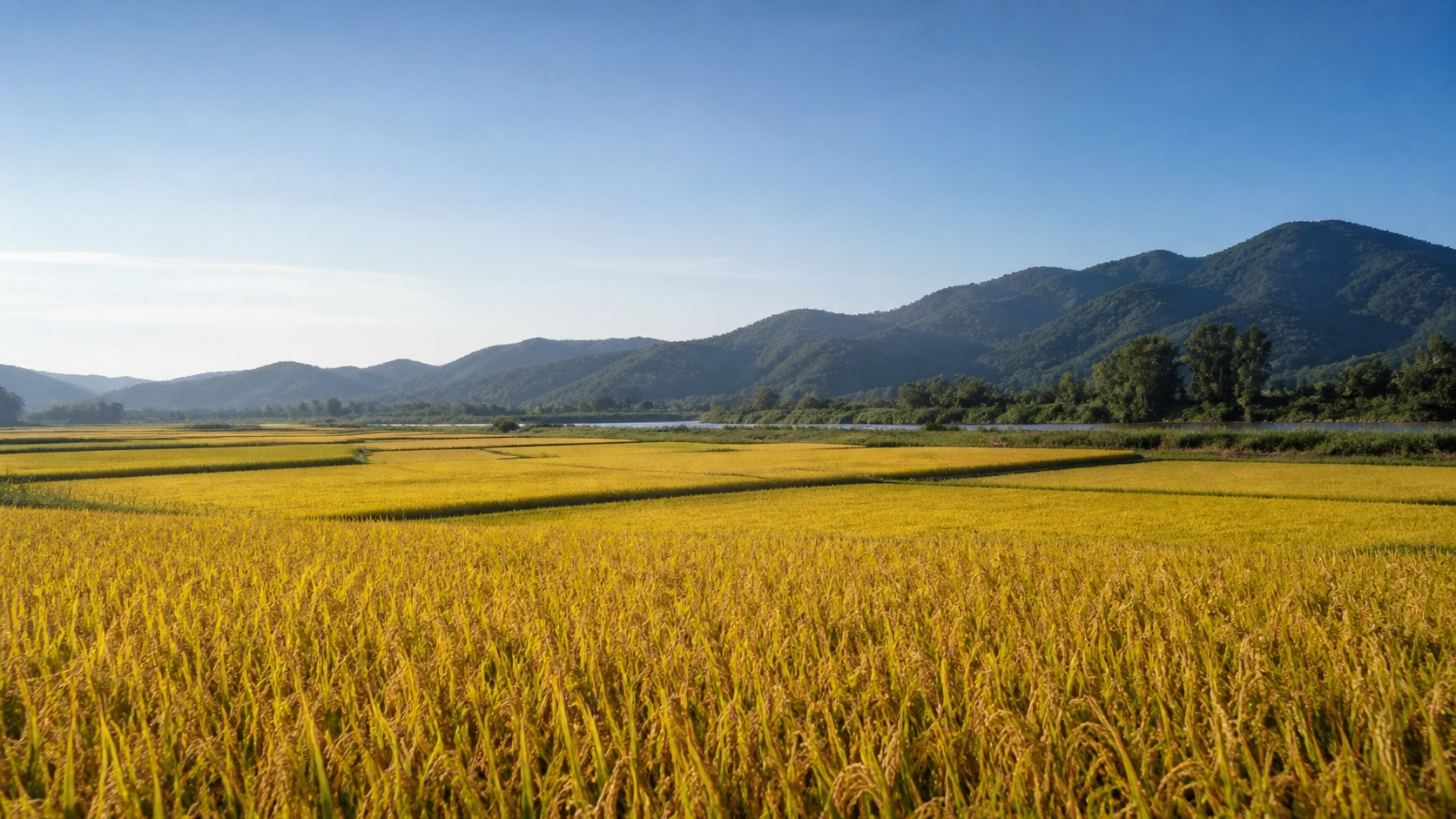
Yeoncheon lies at the northern edge of Gyeonggi Province. The Imjin River crosses the county and meets the Hantan River. Yeoncheon’s Agricultural Technology Center describes the river-basin plains, irrigation conditions, relatively limited pollution sources and fertile land as part of the area’s agricultural foundation.
02 · VARIETY
Look for the variety within the name ‘Yeoncheon rice’
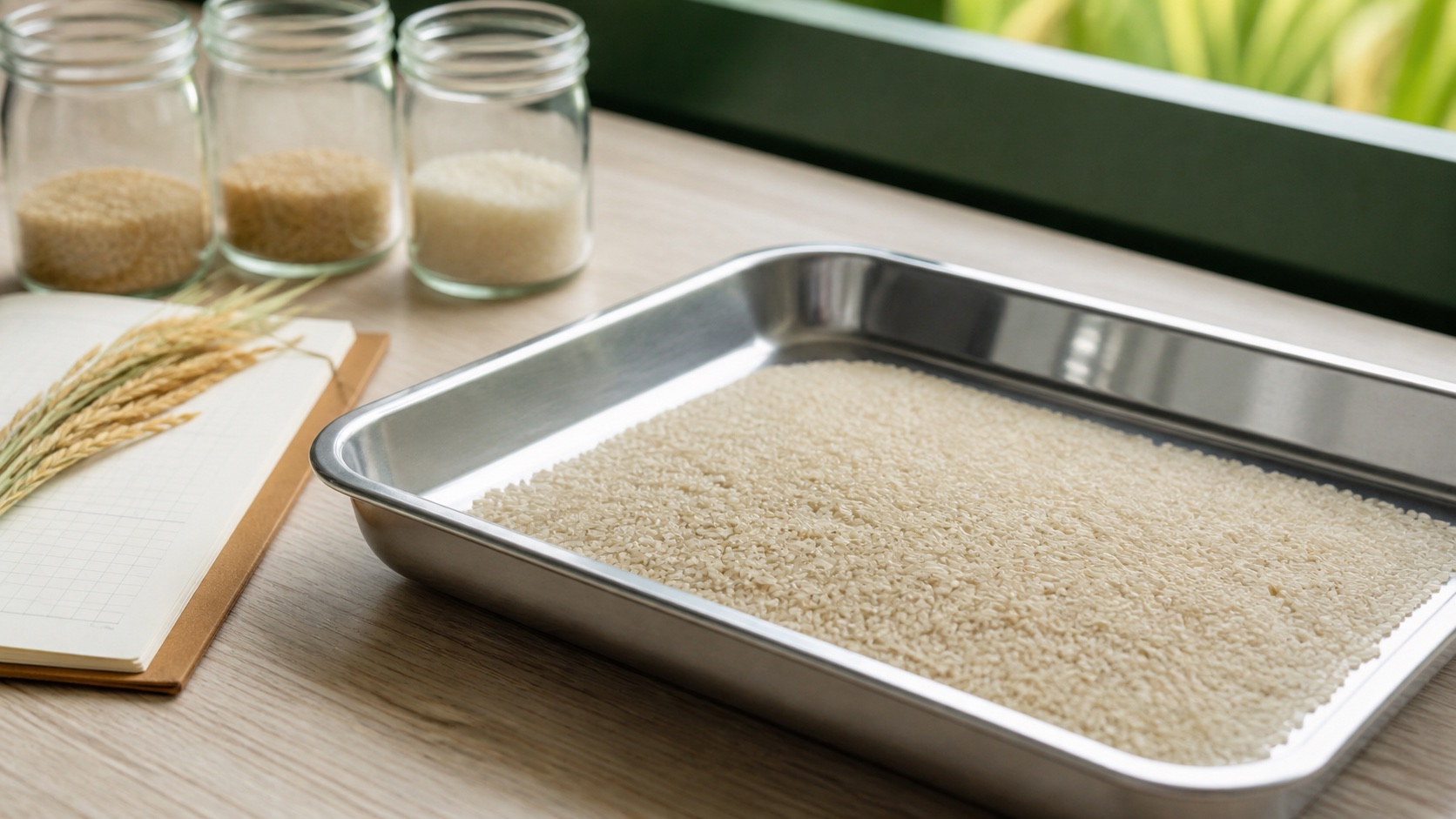
An official historical record of a GAP pilot production area lists Koshihikari, Matdream and Haiami in variety-specific production zones. The record is useful because it shows why Yeoncheon rice should not be treated as one uniform taste: variety, crop year, milling and storage all matter.
Producer or producer group and Korean origin
Variety and whether the rice is single-variety or blended
Crop year, milling date, weight and storage instructions
Certification number and validity when a GAP mark is shown
03 · QUALITY
Quality connects cultivation with post-harvest management
Gyeonggi Province’s public case record describes soil-based fertilisation, irrigation-water checks, farm-work logs, safe pesticide use, testing for heavy metals and pesticide residues, intake inspection and low-temperature storage. These are examples of the controls that can connect production records to finished rice quality.
- 01Growing environmentSoil and irrigation water
- 02Farm recordsFertilisation, crop protection and work logs
- 03Safety controlsPesticide residues, heavy metals and other hazards
- 04Post-harvestIntake, milling, storage and distribution
04 · PRODUCER
Regional trust grows when the producer can be identified
Yeoncheon’s Agricultural Technology Center introduces Namto-Buksu rice with variety and producer-name labelling. On an actual package, readers can check the producer or producer group, origin, variety, crop year and milling date. Where a certification mark is used, its number and validity should be checked in the official database.
- Producer or producer group and Korean origin
- Variety and whether the rice is single-variety or blended
- Crop year, milling date, weight and storage instructions
- Certification number and validity when a GAP mark is shown
05 · TABLE & STORAGE
Good raw material is completed through storage and cooking
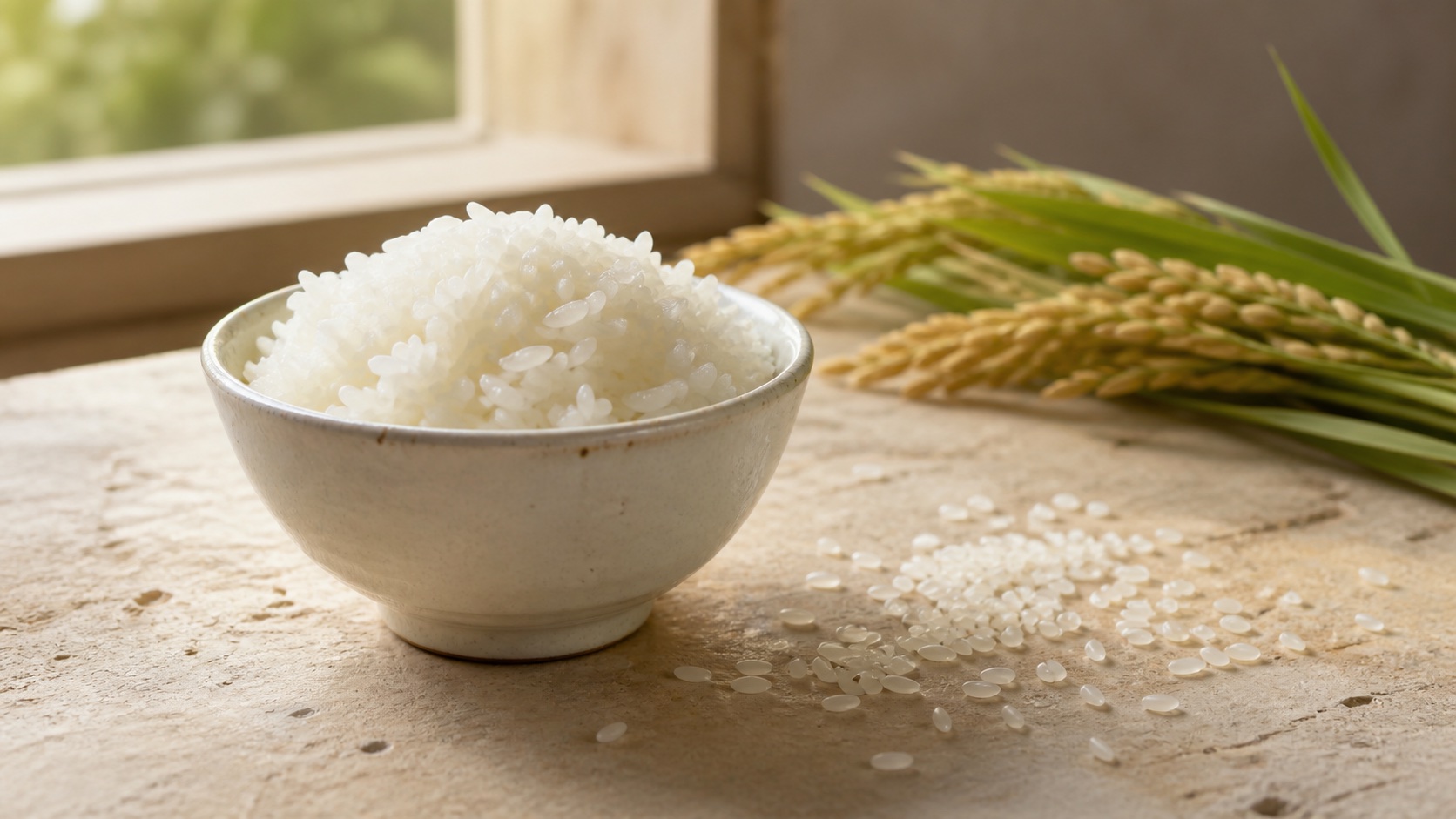
Rice is sensitive to heat, moisture, odours and pests. Buy an amount that suits the household’s consumption cycle, keep it sealed in a cool and dry place, and follow any storage directions printed on the package. For the first cook, use the producer’s directions as a starting point and adjust water to preference.
Choose a pack size that matches how quickly the household uses rice.
Avoid moisture and strong odours, and keep the container clean.
Begin with the pack directions, then tune the water to your preferred texture.
06 · FOOD CULTURE
From daily rice to processed foods and regional cuisine
Rice can extend from polished and brown rice to flour, rice cakes, nurungji, fermented foods and local menus. Yeoncheon’s Agricultural Processing Center supports eligible local farmers with prototype production and processing-business incubation, creating a public foundation for testing new uses of locally grown crops.
07 · VERIFIED DATA
Read every public record with its date and scope
Public sources describe the regional environment, production guidance, a historical GAP management case and processing support. They do not replace the label or current certification record of an individual product.
08 · BUY & VISIT
Check the label when buying and connect the grain to its place
Yeoncheon’s official agricultural website links to the Namto-Buksu market, while the county’s tourism site introduces a seasonal agricultural-products market. Products, stock, producers and certification status change, so use the current product page and package as the final reference.